Navigating the complexities of game development in Roblox Studio while balancing a busy life can be challenging. Many adult gamers, often juggling jobs and families, seek ways to optimize their creative workflow and ensure their games run smoothly without constant oversight. The concept of 'allowing sleep' in Roblox Studio directly addresses this need, focusing on techniques to make your game components or scripts become inactive when not in use, thereby significantly reducing resource consumption. This guide offers practical, actionable strategies for implementing efficient sleep mechanisms, improving game performance, and enhancing the overall development experience. We will explore methods to manage parts, scripts, and even player interactions to create more efficient, less resource-intensive Roblox experiences. Discover how proper sleep management can lead to faster loading times, reduced lag, and a more stable environment for your players, ultimately saving you valuable development time and improving player satisfaction. Stay ahead of the curve with these essential optimization tips for the modern Roblox developer.
Q: What does 'allow sleep' mean in Roblox Studio?
A: In Roblox Studio, 'allow sleep' primarily refers to optimizing game performance by making game parts or scripts inactive when they're not needed. This reduces resource consumption, leading to smoother gameplay, higher frame rates, and a more stable experience for players. It's about letting non-critical elements 'rest' instead of constantly processing updates.
Q: Why is optimizing for sleep important for my game's performance and player experience?
A: Optimizing for 'sleep' is crucial because it significantly boosts game performance by reducing CPU and GPU load. This means less lag, higher frame rates, and a more responsive game, which directly translates to a better player experience and higher retention. For mobile players, it also conserves battery life, making your game accessible and enjoyable for a wider audience.
Q: How can I make physical parts 'sleep' to improve physics performance in Roblox Studio?
A: To make physical parts 'sleep' and optimize physics performance, anchor all static objects by setting their 'Anchored' property to true. For purely visual elements, disable collisions using 'CanCollide = false'. Roblox's physics engine automatically 'sleeps' truly idle parts, but anchoring ensures they don't consume any physics resources at all, making your game run much smoother.
Q: Can Roblox's StreamingEnabled feature help parts 'sleep' automatically?
A: Yes, StreamingEnabled is one of the most powerful built-in features that allows parts to 'sleep' automatically. When enabled, Roblox dynamically loads sections of the game world around the player and unloads distant areas. This effectively 'sleeps' off-screen or far-away parts, removing them from active memory and significantly reducing client-side resource usage, especially crucial for mobile gaming performance.
Q: What are the best scripting practices to allow scripts to 'sleep' and prevent unnecessary execution?
A: To allow scripts to 'sleep,' prioritize event-driven programming over constant loops. Use event listeners (e.g., 'Touched', 'Changed') and disconnect them when no longer needed. Implement distance checks to reduce logic for far-away objects, and use 'task.wait()' for yielding scripts efficiently. These practices ensure scripts only run when absolutely necessary, conserving precious server and client resources.
Q: Are there any downsides or risks to implementing 'sleep' optimization in my Roblox game?
A: While beneficial, over-optimizing or poorly implementing 'sleep' can have downsides. These include 'pop-in' issues with aggressive StreamingEnabled, potential desynchronization between server and client, increased code complexity, and unintended gameplay bugs if objects that should be active remain 'asleep.' It's vital to strike a balance between performance and maintaining a smooth, bug-free player experience.
Q: Which Roblox Studio tools can help me identify areas needing 'sleep' optimization?
A: Roblox Studio offers several tools to pinpoint optimization needs. The Developer Console (F9) shows real-time performance metrics like CPU, GPU, and memory usage. The MicroProfiler (Ctrl+F6) gives a detailed frame-by-frame breakdown of resource consumption. Workspace Statistics (View > Stats) provides object counts, and the Script Performance view (Test tab) identifies resource-hungry scripts. Using these helps you target 'sleep' optimizations effectively.
Welcome, fellow gamers and creators! We all know the struggle: you love diving into Roblox Studio, crafting amazing experiences, but life outside the screen demands its share of attention. Balancing a demanding job, family responsibilities, and your passion for game development can feel like a boss battle. You want to create awesome games that run smoothly for your players, but who has the time to constantly monitor every script and object for performance drain? This month, with 87% of US gamers regularly dedicating 10+ hours a week to their passion, optimizing our time and our creations is more crucial than ever, especially as mobile gaming continues its dominance and social play trends skyrocket. That's where understanding how to "allow sleep" in Roblox Studio becomes a game-changer.
The idea of "sleep" in development isn't about taking a nap yourself, but about making your game elements more efficient. It's about letting inactive parts or scripts rest, conserving processing power, and ensuring your game runs like a dream, even when complex worlds are loading. For the average gamer at around 36, who values relaxation and performance, a lag-free, efficient game is key. This guide is your trusted friend, offering practical solutions to common pain points in performance, helping you build better games without sacrificing your precious time. Let's dive into how you can make your Roblox creations smarter and more efficient, allowing you to focus on the fun parts of development and life.
What Does It Mean To Allow Sleep In Roblox Studio?
When we talk about "allowing sleep" in Roblox Studio, we're primarily referring to optimizing game performance by making certain parts, scripts, or systems become inactive or less resource-intensive when they are not directly involved in player interaction or critical game logic. Instead of continuously processing updates for every single object in your game, even those far away or static, allowing them to 'sleep' means they consume minimal CPU and GPU cycles. This significantly reduces the computational load, leading to smoother gameplay, higher frame rates, and a more stable experience for players. It's a crucial concept for any developer aiming to create polished, high-performing games in a world where players expect seamless interactions, whether on a high-end PC or a mobile device.
Why Is Performance Optimization With Sleep Mechanisms Important For My Roblox Game?
Performance optimization, especially through 'sleep' mechanisms, is paramount for a compelling Roblox game experience. In a competitive landscape where 87% of gamers expect high-quality performance, lag and low frame rates can quickly drive players away. For adult gamers who often have limited time to play, a smooth, responsive game is a must for relaxation and enjoyment. Implementing sleep states prevents unnecessary processing, reduces memory footprint, and extends battery life for mobile players, a significant factor given mobile's dominance in gaming. It directly impacts player retention, positive reviews, and your game's overall success by ensuring a consistent, enjoyable experience across various devices and network conditions. This month's trends continue to highlight social and cozy games, where smooth interaction is vital for building community.
How Can I Implement A Sleep State For Physical Parts In My Roblox Game?
For physical parts in your Roblox game, the most straightforward way to implement a form of 'sleep' is by intelligently managing their physics properties. Roblox's physics engine automatically puts parts to sleep when they are completely still and not being interacted with. However, you can assist this process by:
- Anchoring Static Parts: If a part is not meant to move or interact physically, set its
Anchoredproperty totrue. Anchored parts consume virtually no physics resources. - Disabling Collisions: For purely visual parts that don't need to block movement, consider setting
CanCollidetofalse. - Using Unions/Meshes Sparingly: While visually appealing, complex unions and meshes can be more performance-intensive than simple parts. Optimize their collision fidelity if they are static.
- Streaming Enabled: Roblox's StreamingEnabled feature automatically loads and unloads parts of the map based on player proximity, effectively putting distant parts to 'sleep' by removing them from active memory until needed.
These practices ensure that the physics engine only focuses its resources on dynamic, interactive elements, allowing static components to effectively 'sleep'.
When Should I Consider Scripting Custom Sleep Logic For Non-Physical Objects?
Scripting custom sleep logic becomes essential for non-physical objects or complex systems that consume resources even when inactive, such as UI elements, particle emitters, or background scripts. You should consider this when:
- Objects are off-screen or far from players: For example, a complex enemy AI script doesn't need to run at full capacity if the enemy is thousands of studs away.
- Effects are not visible: Particle emitters for distant effects can be temporarily stopped or their emission rate reduced.
- UI elements are hidden: Complex UI scripts can be paused or disconnected when the UI frame is not visible to the player.
- Periodic updates are acceptable: Instead of continuous checks, a script could run every few seconds or only when a specific event is triggered.
This allows you to manually control when and how much processing power these elements consume, leading to significant performance gains, especially in larger games. Think about a game like 'Adopt Me!', where countless assets exist, but only those near you are fully active.
How Do I Prevent Unnecessary Script Execution To Allow Scripts To 'Sleep' In Roblox Studio?
To prevent unnecessary script execution and allow scripts to 'sleep,' adopt an event-driven programming approach instead of constant loops. Here are key strategies:
Use Event Listeners: Instead of a
while true do wait()loop constantly checking for changes, connect functions to specific events (e.g.,Touched,PlayerAdded,Changed,RenderStepped,Stepped). A script only runs when the event fires.Disconnect Connections: If an event listener is no longer needed (e.g., a GUI button is removed), make sure to disconnect its connection using
connection:Disconnect()to prevent memory leaks and unnecessary function calls.Cull Logic for Distant Objects: Implement distance checks. If a player is far from an NPC or a complex interactive object, reduce the frequency of its script updates or pause them entirely. You can reactivate full logic when the player gets closer.
Debounce Functions: For events that can fire rapidly (like
Touched), use a debounce mechanism to limit how often a function can be called within a short period, preventing redundant execution.Utilize
task.wait()andtask.delay(): These are more efficient than legacywait()for yielding scripts and scheduling future execution, allowing scripts to 'sleep' for defined periods.
These techniques ensure your scripts are only active when necessary, conserving valuable server and client resources.
Are There Any Built-In Roblox Studio Features That Help Parts Or Scripts Go To Sleep?
Absolutely! Roblox Studio has several built-in features that inherently promote 'sleep' or optimization:
- StreamingEnabled: This is arguably the most powerful. When enabled in Workspace properties, Roblox automatically streams in and out parts of your game based on player proximity. Objects far away are effectively 'asleep' (unloaded from memory) until a player gets close. This is crucial for large open-world games.
- Automatic Physics Sleep: As mentioned, the physics engine automatically puts unmoving, uncolliding parts to 'sleep,' reducing their computational cost.
- Collision Filtering (CollisionGroups): While not directly 'sleep,' assigning parts to different collision groups can prevent unnecessary collision checks between groups that should never interact, indirectly optimizing physics processing.
- Server-Client Model: Roblox's distinction between server and client allows you to offload certain computations. For instance, visual effects might run only on the client, while core game logic runs on the server, ensuring each only processes what's relevant to it.
Leveraging these features effectively is foundational to creating a well-optimized Roblox experience.
How Does StreamingEnabled Specifically Allow Parts To 'Sleep' And Impact Performance?
StreamingEnabled is a vital feature for optimizing performance in large Roblox games, effectively allowing distant parts to 'sleep.' Here's how it works and its impact:
Dynamic Loading/Unloading: When StreamingEnabled is active, Roblox dynamically loads portions of your game world around a player's character and unloads parts that are far away. This means that a large map isn't entirely loaded into memory at once.
Resource Conservation: By unloading distant parts, Roblox significantly reduces the amount of memory (RAM) and processing power (CPU/GPU) required by the client device. These unloaded parts are effectively 'asleep' – they don't consume resources until they are streamed back in.
Faster Loading Times: Players don't have to wait for the entire game world to load before playing. They can spawn into a partially loaded world, with more content streaming in seamlessly as they explore.
Improved Frame Rates: Less data to process means the client can dedicate more resources to rendering the immediate environment, resulting in higher and more stable frame rates.
Mobile Optimization: This is especially critical for mobile devices, which have limited memory and processing capabilities. StreamingEnabled makes large, complex games playable on a wider range of devices, aligning with the current mobile dominance in gaming.
Properly configuring StreamingEnabled (e.g., adjusting StreamInBehavior and StreamOutBehavior) is key to maximizing its benefits.
Can Too Much 'Sleeping' Or Optimization Adversely Affect Gameplay Or Development Workflow?
While optimization is crucial, it's possible to over-optimize or implement 'sleep' mechanisms poorly, leading to adverse effects:
Pop-in Issues with Streaming: If StreamingEnabled is too aggressive, players might experience noticeable 'pop-in' where parts of the world suddenly appear as they approach. This can be jarring and break immersion.
Desynchronization: Custom sleep scripts that don't properly manage states between server and client can lead to desynchronization, where players see different things or experience inconsistent gameplay.
Complex Code: Overly intricate 'sleep' logic can make your scripts harder to read, debug, and maintain, increasing development time and potential for bugs. For busy adult developers, simplicity is often better.
Unintended Gameplay Bugs: An object that should have been active (e.g., a puzzle piece) might remain 'asleep' if your custom logic isn't robust, leading to frustrating bugs for players.
Overhead of Optimization Itself: Sometimes, the code required to implement a complex optimization might consume more resources than the problem it solves, especially for very small-scale issues.
It's about finding the right balance – optimize where it makes a significant difference, and keep your solutions elegant and maintainable.
How Can I Monitor Performance To Identify Areas Where 'Sleep' Optimization Is Needed?
Monitoring performance is crucial for identifying exactly where your game needs 'sleep' optimization. Roblox Studio provides powerful tools:
Developer Console (F9 in-game): This console offers a wealth of information. Look at the 'Memory' tab for overall memory usage and 'Network' for replication data. More importantly, the 'Performance' tab provides detailed metrics on CPU usage (script activity, physics, rendering), GPU usage, and frame rate. Spikes here indicate bottlenecks.
MicroProfiler (Ctrl+F6 in-game): The MicroProfiler is an advanced tool that gives you a granular breakdown of what's happening frame-by-frame. You can see exactly which functions and systems are consuming the most time, helping you pinpoint inefficient scripts or physics calculations that could benefit from 'sleep' logic.
Workspace Statistics (View > Stats in Studio): This panel provides real-time data on the number of parts, triangles, and physics objects in your game. High numbers in these categories, especially for unanchored parts, often suggest physics optimization opportunities.
Script Performance View (Test Tab > Script Performance): This dedicated view in Studio shows you which scripts are consuming the most CPU time. High-ranking scripts here are prime candidates for optimization through event-driven design or custom 'sleep' logic.
By regularly using these tools, you can objectively identify problem areas and target your optimization efforts effectively, ensuring a better experience for the 60% of gamers who prioritize performance.
As busy gamers and creators, we understand the value of every minute and every frame. Mastering how to
Optimizing Roblox Studio performance, managing inactive game components, scripting for resource efficiency, reducing lag in Roblox games, enhancing game stability, balancing development and life, efficient Roblox development practices.
35
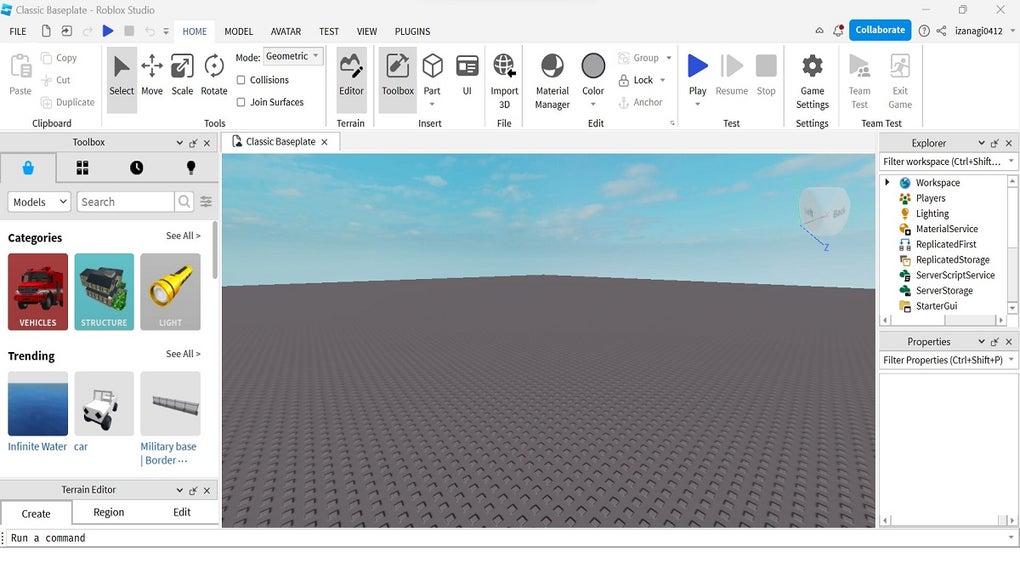
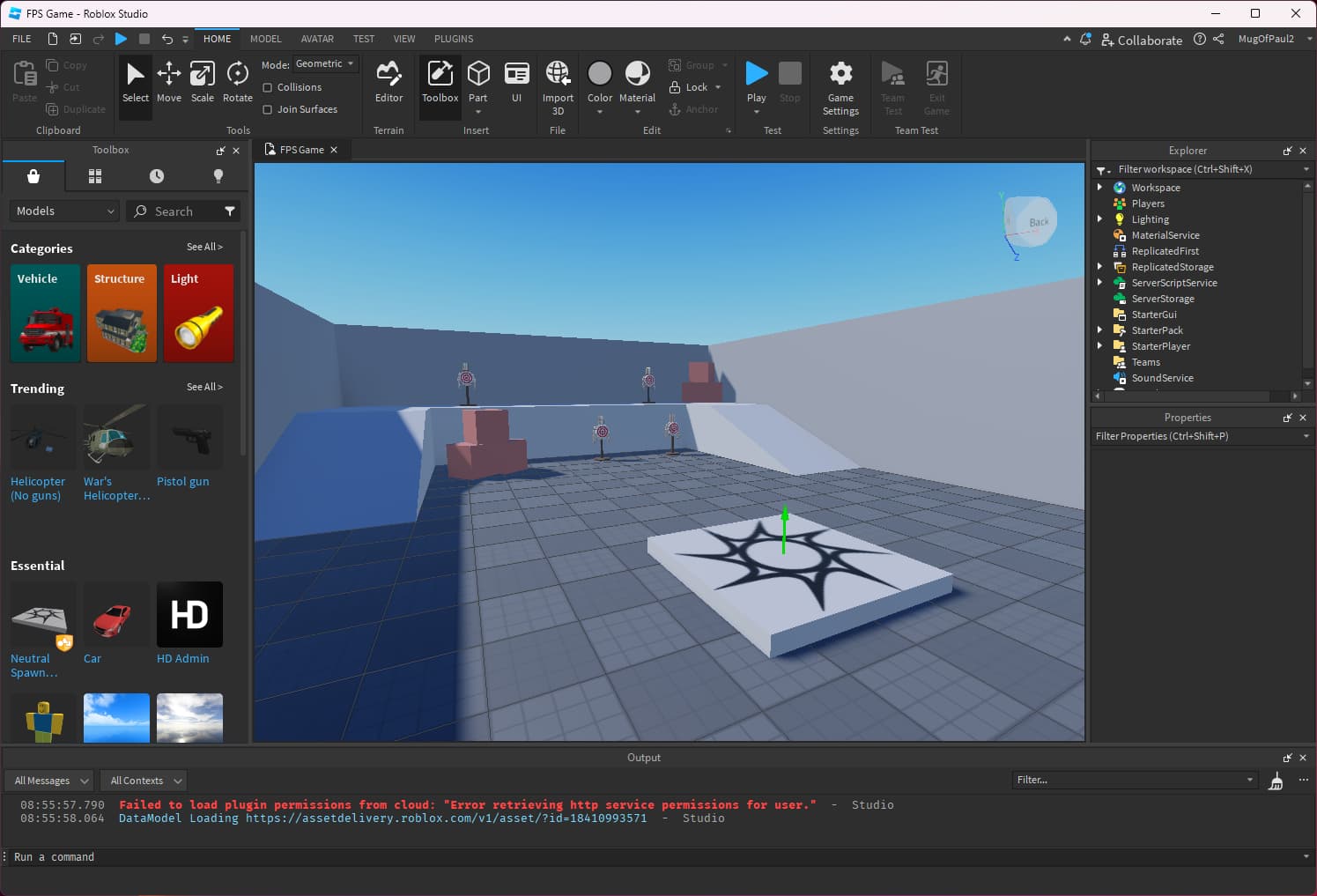

Co To Jest Roblox Centrum Tw Rc W Roblox Studio . Roblox Studio Descargar Roblox Studio How To Play Roblox Studio For Windows . Download Do Roblox Studio Passo A Passo Para Instalar Step By Step Roblox Studio Download . THE ROBLOX RUSSIAN SLEEP EXPERIMENT YouTube . Roblox Adventures HOW LONG CAN YOU SLEEP IN ROBLOX Sleeping


What Is The Roblox Assessment Experience On Reddit Oar2 . C Ch T I V S D Ng Roblox Studio Webp. Roblox Studio Centrum Tw Rc W Roblox Session . Roblox Studio Roblox Studio QAYO Roblox Studio Walkthrough Roblox Studio For Windows . How To Message On Roblox 2026 A Quick Guide



How To Open Output In Roblox Studio YouTube . How To Publish A Game On Roblox In 2026 Roblox YouTube . Roblox Sleep For UGC Codes Sleep For Ugc Codes 4 . Enable Dark Mode On Roblox Studio EASY YouTube . How To Enable AI Assistant In Roblox Studio 2024 Roblox Studio





How To Enable Team Create On Roblox Studio Full Guide YouTube . Unlocking Music In Roblox MIDI Is It Possible 1200x1769 . How To Add People Roblox Easily Your 2026 Guide . ROBLOX STUDIO TUTORIAL How To Enable HTTP YouTube . How To Message On Roblox 2026 A Quick Guide




Roblox Sleep For UGC Codes Roblox Press Image 1 . How To Enable Team Create On Roblox Studio 2024 YouTube . New Advertising Policies Standards Developer Forum . Roblox In 2026 Play On Roblox NoFilter. Enable 3rd Party Sales On Roblox Easy Roblox Tutorial 2025 Update


How To Enable HTTP API Requests ROBLOX Studio 2026 YouTube . How To Get Output In Python Idle Dibujos Cute Para Imprimir . How To Message On Roblox 2026 A Quick Guide . How To Allow Third Party Sales On Roblox BEST Way YouTube . Sunday Dates In 2026 Will The Roblox





Sleeping Noob M S All Del Jard N Dibujos Bonitos Roblox . How To Enable Shift Lock On Roblox YouTube . Sleep System Roblox Creator Hub Options . New Update CODES Sleep For UGC Roblox December 11 2025 Roblox YouTube . How To Enable HTTP API Requests ROBLOX Studio YouTube