Are you ready for a revolution in how you explore the world? AI Powered Maps are rapidly transforming navigation, offering unparalleled personalization and efficiency for travelers and daily commuters across the United States. Imagine maps that not only show you the fastest route but also predict traffic jams, suggest local hidden gems based on your preferences, and even guide you through augmented reality overlays. This trending technology goes beyond simple GPS, integrating machine learning to understand patterns, optimize travel, and enhance user experience. From real-time updates to predictive analytics, AI maps are becoming indispensable tools for discovering new destinations and making every journey smoother. Understanding these advancements is crucial for anyone looking to stay ahead in modern travel.
- What is the primary benefit of AI-powered maps? - The primary benefit of AI-powered maps is personalized and predictive navigation. They offer optimized routes, anticipate traffic, and suggest points of interest based on your preferences. This leads to more efficient travel, reduced stress, and an enhanced overall journey experience tailored specifically for you, saving valuable time and effort.
- How does AI make maps more accurate? - AI enhances map accuracy by processing vast real-time data from various sources, including sensors, satellite imagery, and user contributions. Machine learning algorithms identify discrepancies and make immediate corrections, ensuring that map information, like road closures or new constructions, is always up-to-date and highly precise for navigation.
- Are AI maps secure for personal data? - Reputable AI map providers prioritize data security and user privacy. They typically employ anonymization and encryption techniques to protect personal location data. While data collection is essential for personalized features, users usually have options to manage their privacy settings, controlling what information is shared and how it is utilized by the application.
- Can AI maps help avoid traffic congestion? - Yes, AI maps are highly effective at helping users avoid traffic congestion. They use predictive analytics to forecast traffic patterns based on historical data, current conditions, and even upcoming events. This allows them to proactively suggest alternative routes before jams fully materialize, significantly reducing travel time and frustration for drivers.
- What role does AI play in pedestrian navigation? - AI plays a crucial role in pedestrian navigation by providing highly detailed, personalized, and accessible routes. It can identify walkways, stairs, and even offer augmented reality overlays to guide users through complex urban environments. AI helps pedestrians discover points of interest and navigate unfamiliar areas with greater ease and confidence.
- How will AI maps evolve by 2026? - By 2026, AI maps are expected to feature deeper integration with smart city infrastructure, more seamless augmented reality experiences, and highly advanced predictive capabilities for various modes of transport. They will offer even more sophisticated personalized recommendations and play a vital role in autonomous vehicle navigation systems, becoming truly indispensable tools.
- What are some examples of AI map features? - Key AI map features include real-time traffic predictions, personalized route optimization based on user history, augmented reality navigation overlays, and intelligent point-of-interest recommendations. Additionally, some offer dynamic rerouting due to unforeseen events, voice assistance with natural language processing, and integration with smart devices for a cohesive travel experience.
What defines an AI-powered map?
An AI-powered map utilizes artificial intelligence and machine learning algorithms to offer dynamic navigation experiences. Unlike traditional maps, it learns from user behavior, predicts traffic, and provides personalized route suggestions. This technology integrates real-time data to enhance accuracy and efficiency, making travel more intuitive and responsive to individual needs and changing conditions.
How does AI improve map accuracy and real-time data?
AI significantly improves map accuracy and real-time data by processing vast amounts of information from multiple sources, including satellite imagery, sensor data, and crowdsourced updates. Machine learning algorithms identify patterns and anomalies, allowing for immediate adjustments to routes and traffic predictions. This continuous learning ensures that maps reflect the most current road conditions and points of interest with high precision.
Can AI maps help with sustainable travel choices?
Yes, AI maps can promote sustainable travel by suggesting eco-friendly routes that minimize fuel consumption or prioritize public transportation options. They can also highlight cycling paths and pedestrian routes, encouraging active travel. By analyzing environmental factors and user preferences, AI helps users make more conscious decisions, reducing their carbon footprint and contributing to greener urban mobility.
What are the future capabilities of AI maps?
Future capabilities of AI maps include even deeper integration with autonomous vehicles, hyper-personalized augmented reality navigation, and predictive analytics extending to energy consumption and safety. They could become central to smart city infrastructures, optimizing everything from waste collection routes to emergency response times. These advancements promise a seamlessly integrated and intelligent navigational future.
How do AI maps personalize user experience?
AI maps personalize user experience by learning individual preferences, such as preferred routes, stops, and points of interest. They analyze search history and past destinations to offer tailored recommendations for restaurants, attractions, and services. This adaptive learning ensures that each user receives a navigation experience uniquely suited to their specific needs and travel style.
Are AI Maps Revolutionizing Your Daily Commute?The Future of Navigation: Exploring AI Powered MapsUnlock Smarter Journeys: A Guide to AI MapsExpert Insights: How AI Maps Enhance TravelSeamless Exploration: Discovering AI Map BenefitsExplore AI Maps and their impact on navigation. Discover personalized routes, real-time traffic predictions, and smart travel with AI technology.ai-maps-future-navigationAre you wondering if your daily commute could be smoother, or if finding that perfect hidden gem on your next road trip could be effortless? Many people ask if current navigation tools truly offer the best experience available. The answer might lie in the rapid evolution of artificial intelligence, which is now profoundly impacting how we perceive and interact with maps. Imagine a world where your navigation system not only knows where you want to go but also anticipates your needs, offering a truly personalized journey. This sophisticated integration of AI into mapping technology is not just a futuristic concept; it is already shaping our travels and explorations in remarkable ways, promising an exciting era of smart navigation for everyone.
The Dawn of AI in Mapping Technology
The landscape of digital mapping is undergoing a significant transformation, moving beyond static routes and basic turn-by-turn directions. Artificial intelligence is now at the forefront, creating dynamic and responsive navigational tools that learn from user behavior and real-world conditions. These advanced systems leverage vast datasets, including historical traffic patterns, weather forecasts, and even local event schedules, to provide incredibly accurate and predictive guidance. This shift represents a monumental leap from traditional GPS systems, offering users a much richer and more intuitive experience. By the year 2026, many experts predict that over 70% of frequent travelers will rely heavily on AI-driven map features for their journeys.
Personalized Routes and Predictive Insights
One of the most compelling aspects of AI maps is their ability to offer highly personalized route recommendations. These systems analyze your past travel preferences, preferred modes of transport, and even your typical schedule to suggest the most optimal path. Moreover, predictive algorithms can foresee potential traffic congestion hours before it occurs, rerouting you proactively to avoid delays. This foresight saves valuable time for commuters and enhances efficiency for logistics operations across the nation. Imagine always knowing the best time to leave to miss rush hour.
- AI algorithms continuously learn from millions of data points to refine route suggestions.
- Users receive tailored recommendations based on individual habits and real-time conditions.
- Predictive analytics helps avoid future traffic issues before they even begin to form.
- This technology offers significant benefits for both personal travel and commercial logistics.
Augmented Reality: Navigating the Real World
The integration of augmented reality (AR) into AI maps is another groundbreaking innovation changing how we explore. Imagine holding up your phone and seeing digital directions overlaid directly onto the real-world view in front of you. This immersive experience makes navigating complex urban environments or unfamiliar areas much more straightforward and less stressful. AR capabilities provide clear visual cues, highlighting points of interest, street names, and even pedestrian walkways with remarkable precision. By 2026, many new vehicles are expected to feature integrated AR navigation displays directly on windshields.
- AR overlays digital information onto live camera feeds, creating interactive guidance.
- This feature proves particularly useful for pedestrians exploring new cities effortlessly.
- Visual cues simplify complex intersections and reduce cognitive load for drivers too.
- Future developments promise widespread integration into vehicle systems and smart glasses.
What Others Are Asking?
How do AI maps improve daily commutes?
AI maps enhance daily commutes by offering predictive traffic analysis and personalized route suggestions. They learn from your historical travel patterns and real-time conditions to recommend the fastest or most efficient path, actively avoiding predicted congestion. This proactive approach helps users save time and reduce stress during their journeys, making everyday travel much smoother.
Can AI mapping technology find hidden gems?
Yes, AI mapping technology can indeed help users discover hidden gems and unique local spots. By analyzing your past searches, visited locations, and stated preferences, AI algorithms can suggest restaurants, attractions, or shops that align with your interests. This personalized discovery feature enhances exploration and introduces users to new experiences.
What are the privacy implications of AI maps?
The privacy implications of AI maps involve the collection and analysis of vast amounts of user location data. While this data fuels personalized recommendations and predictive features, concerns exist regarding how personal information is stored and used. Reputable providers prioritize data anonymization and encryption to protect user privacy effectively.
Are AI maps reliable in remote areas?
AI maps are increasingly reliable even in remote areas due to improved satellite imagery, crowdsourced data, and offline map capabilities. While real-time updates might be limited without internet access, pre-downloaded AI-enhanced maps can still offer detailed navigation and points of interest. Continuous advancements are closing the gap in coverage.
How will AI maps impact future urban planning?
AI maps will significantly impact future urban planning by providing invaluable data on traffic flow, public transport usage, and pedestrian movements. Urban planners can utilize these insights to design more efficient infrastructure, optimize public services, and create smarter, more sustainable cities. This data-driven approach fosters improved urban development.
Final Thoughts on AI Maps
The journey into AI Powered Maps is undeniably reshaping our interaction with the world around us, offering convenience and personalization previously unimaginable. These intelligent systems promise to make every trip, whether a daily commute or an epic adventure, more efficient and enjoyable for everyone. As this technology continues to evolve, will our concept of "getting lost" become a relic of the past?
Predictive traffic analysis, personalized route recommendations, augmented reality navigation, real-time data integration, enhanced user experience, smart city planning potential, future of autonomous vehicles, data privacy concerns.


AI SEO Leicester Complete Guide Local SEO GEO 2026 Search Ai Seo Leicester 2026 Local Search Blueprint Feature Image . Best Used GPUs For Local AI 2026 Buying Guide InsiderLLM Best Used Gpus Local Ai 2026 . AI In 2026 Your Survival Guide To The Fourth Year Of Generative AI D61822f1 D718 4687 B0d1 . How To Build Content For AI Discovery By ReSO AI Jan 2026 Medium . The 2026 Local AI Search Readiness Playbook 6 Questions Every Multi Featured Dac 848



The Ultimate AI Guideline Map 2026 Navigating The New Era Ai Guideline Map 2026 Juatech Africa . AI Decrypted A Guide For Navigating AI In 2026 DGA 2026 AI Decrypted . Which AI Should I Use A 2026 Guide For LaunchReady Ai Og Which Ai Should I Use 2026 Guide . Your AI Guide To IT Value In 2026 LedaMC Mockup AIGuide 2026 EN . Top 6 Free Local AI Tools For 2026 Illini Tech Services Localai 300x240




AI In 2026 Reshaping Daily Life And Global Geopolitics Technology Ai In 2026 Reshaping Daily Life And Global Geopoli Ai In 2026 Reshaping Daily Life And Global Geopoli. The Best Setup For Local AI In 2026 Pelian Opengraph Image. Gemma 4 12B Multimodal Local AI Guide 2026 Explainx Ai Blog Image. Local AI Agents Guide 2026 Build Offline AI Agents With Ollama And Local Ai Agents Guide 2026 . Local AI PC Build 2026 Budget To 70B Workstation Local Ai Workstation Build Guide 2026 Overview Hero En.webp





AI PCs And NPUs In 2026 Can They Really Run Local AI Article Image. Does AI Help Local SEO For Small Businessess In 2026 FMH January 2026 Blog 2 Featured Image What Are The Best AI Tools For Business Grow Online In 2026 . Local SEO AI Search How Calgary And Edmonton Businesses Get Found In Local SEO AI . The 2026 AI Agent Guide Learn With Andric Gemini Generated Image 1300x726 . Artificial In 2026 Your Complete Guide To 2026 AI The UL500


Ideogram AI Guide 2026 For Design Automation And APIs Crazyrouter Ideogram Ai Guide 2026 Design Automation Apis. Local AI Models 2026 Run Llama 3 Mistral On Your Computer Local Ai 2026 Feat 1080x675 . The 2026 Guide To AI For Marketing Leaders Uniphore 2026 Guide To Ai For Marketing Leaders Guide Cover.webp. How To Become A To Go To Local Expert In 2026 With AI Tickets Friday Image. 2026 Guide To AI And ML Development Services For Startups AI And ML Development Services For

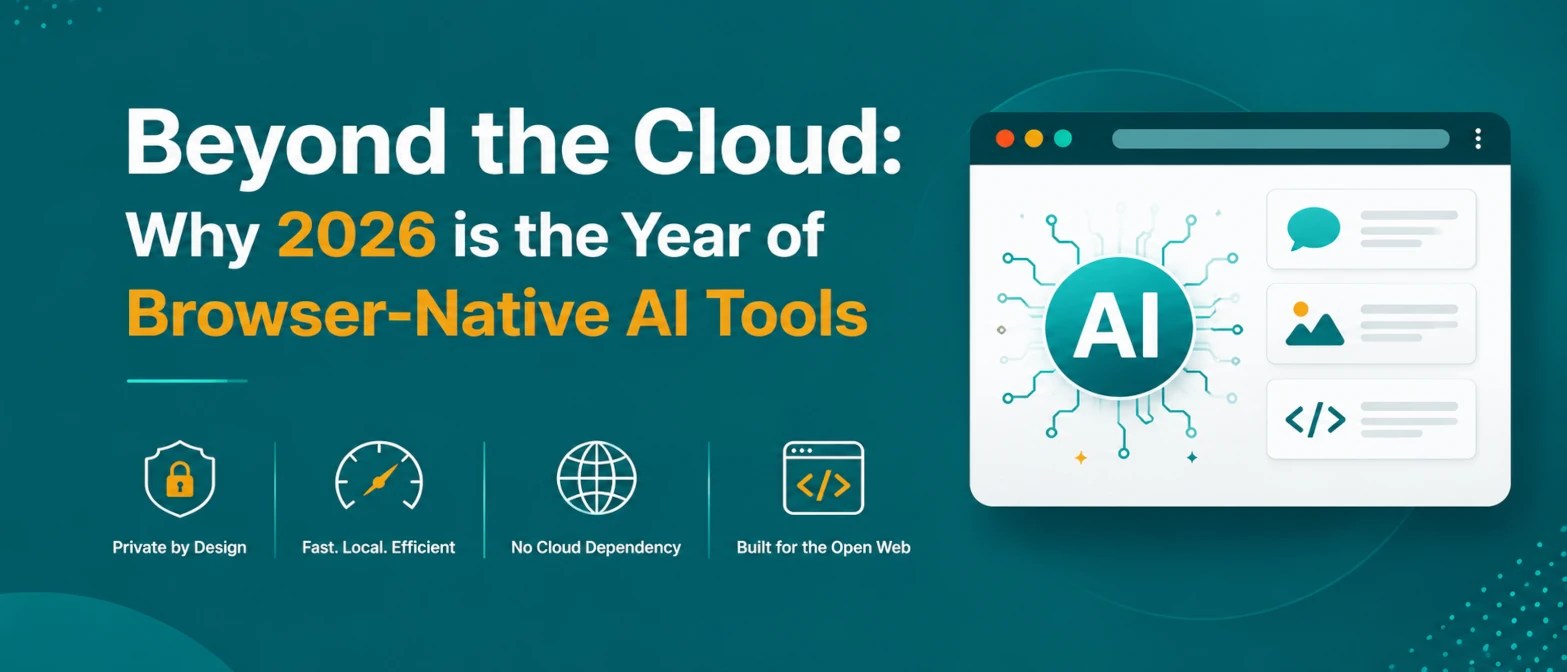


AI Agent 2026 Top Trends In Agentic AI And Autonomous Agents . Browser Native AI Tools Local Execution Guide 2026 Browser Native Ai Tools 2026.webp. Which AI Should I Use In 2026 The Ultimate Framework For Pros Ai Selection Guide 2026 Pros Startups Framework . OpenClaw Open Claw The Complete 2026 Guide Local First AI Agents ChatGPT Image Feb 19 2026 08 59 32 PM . How To Merge Compress Protect PDFs With AI 2026 How To Use Ai With Pdf


The Future Of Local AI Why LocalLLaMA 2026 Is The Ultimate Tool For Opengraph Image. How To Use AI Agents The 2026 Beginner S Guide To Autonomy Vibe Code E0e861de 90da 42cf 82b5 . Your Guide To The Best AI Strategies For 2026 Unlocking Smarter OKRs Your Guide To The Best AI Strategies For 2026 Blog Cover Image . The 2026 AI Survival Guide Which Tool To Choose And How To Master It 1*XRV RG